Source CE Certified Hydraulic Hole Punch for Bags, Paper, and Metal
Compare 30 listings of CE certified hydraulic hole punch machines designed for bag making, paper processing, and metal cutting applications. Evaluate specifications including hole size, power source, and customization options from verified Chinese suppliers.
Key considerations
Products List




Comprehensive Sourcing Guide
Strategic Sourcing Guide for CE Certified Hydraulic Hole Punch Equipment
Procuring industrial punching equipment requires a rigorous approach that balances technical capability with regulatory compliance. While the core search term often highlights "hydraulic" systems, the available market data reveals a complex landscape where pneumatic and CNC-driven alternatives frequently coexist with hydraulic models. For buyers seeking a CE certified hydraulic hole punch, the primary challenge lies in distinguishing between genuine hydraulic power sources and pneumatic or electric variants that may share similar functional outputs. This guide provides a disciplined framework for evaluating suppliers, verifying certifications, and ensuring that the selected equipment meets specific operational needs without relying on unverified marketing claims.
Technical Specifications and Power Source Verification
The first step in sourcing is a precise definition of the power source. The term "hydraulic" implies the use of fluid pressure to generate force, offering high tonnage and consistent performance for heavy-duty metal cutting. However, an analysis of current product listings indicates a significant presence of "Pneumatic Hole Puncher" models. These units, such as those branded with names like Mehupm or Hollan, utilize compressed air rather than hydraulic fluid. While pneumatic systems are often lighter and require less maintenance, they may not deliver the same force consistency as hydraulic systems for thick materials.
Buyers must scrutinize the "Power Source" attribute in supplier catalogs. If the requirement is strictly hydraulic, the listing must explicitly state "Hydraulic" or "Hydraulic Driven." The provided data shows attributes like "Pneumatic Driven" and "Pneumatic" alongside "CNC" control methods. It is critical to verify the "Movement Method" and "Control Method." High-end applications often utilize "Closed-Loop Control" to ensure precision, with processing tolerances ranging from 0.01 to 0.02 mm. When evaluating a hydraulic unit, the buyer should confirm the "Processing Precision" and ensure the machine supports "Contour Control" if complex shapes are required.
Furthermore, the "Application" field is a vital differentiator. Some units are designed specifically for "Metal-Cutting CNC Machine Tools," while others target "Plastic or Paper Bag" manufacturing. A hydraulic punch intended for metal components will differ significantly in construction from a pneumatic unit designed for bag making. The "Mold Base Material" is another key specification; while some listings mention "Aluminum" or "Aluminium Alloy" for lighter duty, heavy hydraulic presses often require more robust base materials to withstand high pressure. The "Punching Knife" material, often cited as "Die Steel Material" or imported from specific regions like Austria, directly impacts the longevity and cutting quality of the tool.
Compliance and Certification Protocols
Certification is a non-negotiable aspect of B2B procurement, particularly when the search term explicitly includes "CE certified." The CE mark indicates conformity with health, safety, and environmental protection standards for products sold within the European Economic Area. In the context of the provided data, "CE" and "RoHS" appear as recurring certification attributes. However, buyers must treat these as observations that require active verification rather than automatic guarantees for every listed product.
The presence of "CE" in a product description does not automatically imply that the specific hydraulic unit being sourced is compliant. The data lists "CE" and "ROHS" with varying levels of confidence. Some entries list "ISO RoHS, CE, GS" as a combined certification block, while others list them separately. A prudent buyer should request the specific CE Declaration of Conformity (DoC) for the exact model number. The "prod_standard" attribute in the data shows values like "56" or references to "Die steel imported from Austria," which are specific but do not inherently confirm CE compliance for the entire machine assembly.
Buyers should verify that the supplier can provide documentation proving the machine meets the relevant Machinery Directive. The "Condition" of the product is another factor; listings show both "New" and "Used" conditions. A used machine may have a valid CE mark from its original manufacture, but modifications or wear and tear could compromise its compliance status. Therefore, the procurement process must include a request for the original technical file or a re-certification report if the machine has been refurbished. The "Brand Name" and "Place of Origin" (e.g., Shanghai, China or Zhejiang, China) are useful for tracing the manufacturer, but they do not substitute for the legal documentation required for CE compliance.
Cost Drivers and Pricing Dynamics
Understanding the cost structure of hydraulic hole punches is essential for budgeting. The observed price range in the market spans from $0.30 to $40,000. This vast disparity reflects the difference between simple manual or pneumatic tools and fully automated, high-end CNC hydraulic systems. A hydraulic unit with "High-End CNC Machine Tools" classification will naturally sit at the higher end of this spectrum due to the complexity of the "Closed-Loop Control" systems and the precision of the "0.01~0.02(mm)" processing capabilities.
Several factors drive the final price. The "Customization" availability is a major cost variable. Listings indicate that customization is "Available," which allows buyers to tailor "Hole Size" (e.g., 12*15mm, 20mm) and "Hole Shape" (e.g., Double Round, Round Hole) to specific needs. Custom molds and tooling, such as the "Slot Length" of 50mm or "Slot" of 680mm mentioned in the data, add to the manufacturing cost. The "Weight" of the unit, ranging from 1.4kg to 6.2kg in the provided examples, often correlates with the material volume and the robustness of the hydraulic cylinder.
The "Power Source" and "Cylinder" brand also influence cost. Units featuring "Airtac" cylinders are noted in the data, suggesting that the quality of the pneumatic components (or hydraulic equivalents) affects the price. Additionally, the "prod_packing" method, whether "Sea Transport Packing" or "Standard Export Carton or Wooden Case," impacts the shipping cost, which is a significant component of the total landed cost for heavy machinery. Buyers should also consider the "MOQ" (Minimum Order Quantity), which ranges from 1 to 10,000 units. A single-unit purchase of a custom hydraulic press will have a higher per-unit cost compared to bulk orders, even if the base price of the machine is fixed.
Typical Applications and Operational Context
The application of the hole puncher dictates the required specifications. The data highlights diverse use cases, from "Components of Bag Making Machine" to general "Metal" cutting. For bag making, the "End Use" is often "Plastic or Paper Bag," requiring specific "Hole Shapes" like "Double Round" or "Straight Three Round Hole." These applications typically favor pneumatic systems due to speed and the lighter material being processed. However, for metal fabrication, the "Application" field specifies "Metal-Cutting CNC Machine Tools," necessitating the higher force and stability of a hydraulic system.
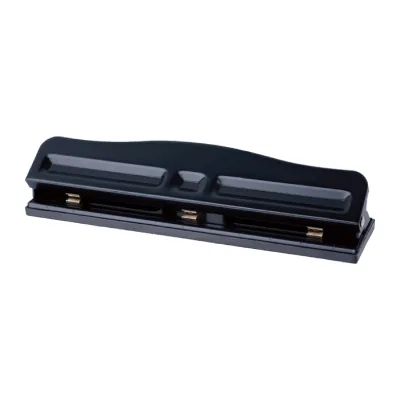
The "Hole Number" and "Hole Center Distance" are critical for production efficiency. Some units are designed for "One" hole, while others, like the "High Quality Metal Adjustable 3 hole punch," handle multiple holes simultaneously. The "Hole Size" must match the production requirements precisely. For instance, a specific model lists a "Hole Size" of 20mm with a "Hole Center Distance" of 30mm. If a buyer's production line requires a different spacing, they must verify if the "Customization" option can accommodate this without compromising the "Processing Precision."
The "Movement Method" is also application-dependent. "Contour Control" is suitable for complex paths, while simple straight punches may not require this level of sophistication. The "Type" of machine, whether a "Pneumatic Hole Puncher" or a "Double Round Hole Punch," must align with the material thickness and the desired throughput. Buyers should ensure that the machine's "Condition" (New or Used) is appropriate for the intensity of the intended application. A used machine might suffice for low-volume bag making but could fail under the continuous stress of high-volume metal cutting.
Supplier Evaluation and Due Diligence
Evaluating a supplier for hydraulic hole punches requires a multi-faceted approach. The "Brand Name" and "Place of Origin" provide initial context, but deeper due diligence is necessary. The data lists origins in "Shanghai, China" and "Zhejiang, China," which are known manufacturing hubs. However, the presence of a location does not guarantee quality. Buyers should verify the "OEM" (Original Equipment Manufacturer) capabilities. The data indicates "OEM: Accept," which suggests the supplier can produce custom designs. This is a positive sign for buyers with unique requirements, but it requires a clear agreement on intellectual property and quality standards.
The "Standard" attribute, such as "Die steel imported from Austria," can be a marker of quality, but it must be verified. A supplier claiming to use imported steel should provide proof of origin and material certificates. The "Weight" and "Size" specifications (e.g., 28.86.66.4cm) help in logistics planning, but they should be cross-referenced with the actual machine dimensions to ensure compatibility with the buyer's facility.
Buyers should also assess the supplier's ability to provide after-sales support. The "Processing Precision" of 0.01~0.02 mm is a high standard that requires skilled maintenance. A supplier with a strong track record in "High-End CNC Machine Tools" is more likely to offer the necessary technical support. The "Condition" of the product, whether new or used, should be clearly defined in the contract to avoid disputes over wear and tear. Finally, the "prod_packing" method should be evaluated to ensure the machine arrives without damage, especially for heavy hydraulic units.
Quality Control and Long-Term Procurement
Quality control is paramount when sourcing hydraulic equipment. The "Processing Precision" and "Control Method" are key indicators of quality. A machine with "Closed-Loop Control" offers better accuracy than open-loop systems. Buyers should request test reports or performance data to verify the "Processing Precision" claims. The "Hole Size" and "Hole Shape" consistency over time is a critical quality metric. A supplier should demonstrate that their "Punching Knife" (e.g., "Die Steel Material") maintains its sharpness and dimensional accuracy over extended use.
Long-term procurement considerations include the availability of spare parts and the lifecycle of the machine. The "Cylinder" brand, such as "Airtac," suggests a level of standardization that may make parts replacement easier. However, for custom hydraulic units, the availability of specific seals, hoses, and valves must be confirmed. The "Customization" feature, while beneficial, can complicate spare parts logistics if the machine is unique. Buyers should negotiate a long-term supply agreement for consumables and critical components.
The "Standard" of the machine, such as "Die steel imported from Austria," should be maintained throughout the machine's life. If the machine is used, the buyer must assess the remaining life of the "Punching Knife" and the condition of the hydraulic system. The "Condition" attribute in the data shows both "New" and "Used" options, and the buyer must decide which offers the best value based on their production volume and budget. Finally, the "prod_packing" method should be reviewed to ensure that the machine is protected during storage and transport, preserving its quality until it is ready for operation.
Summary of Key Verification Points
To summarize, sourcing a CE certified hydraulic hole punch requires a meticulous verification process. Buyers must confirm the power source is truly hydraulic, not pneumatic. They must demand valid CE documentation and verify the "Processing Precision" and "Control Method" against their production needs. The cost drivers, including customization and packing, must be understood to avoid budget overruns. The application context, from bag making to metal cutting, dictates the necessary specifications. Finally, supplier evaluation and long-term quality control plans are essential for a successful procurement. By adhering to these disciplined steps, buyers can navigate the complex market and secure equipment that meets their exacting standards.
FAQs
Can I find CE certified hydraulic hole punch machines with ISO RoHS standards?
Yes, products are available with ISO RoHS and CE certifications alongside GS. However, the provided data shows these certifications often appear alongside pneumatic models, so verify the specific power source is hydraulic before purchase.
What is the processing precision for high-end CNC hole punch machines?
High-end CNC machine tools typically offer a processing precision between 0.01 and 0.02 mm. This level of accuracy supports contour control and closed-loop control methods for complex metal cutting applications.
Which customization options are available for hole size and shape?
Customization is available for hole size and shape, including double round or straight three round holes. Specific dimensions like 12*15mm or 20mm can be tailored, though mold base materials vary between aluminum and steel.
How does the power source affect the machine selection?
The market contains both pneumatic and hydraulic options, but the data highlights pneumatic models with Airtac cylinders. Buyers must explicitly confirm hydraulic power if high tonnage is required for thick metal components.
Can I source these machines from manufacturers in Shanghai or Zhejiang?
Yes, products originate from locations such as Shanghai and Zhejiang in China. These regions host manufacturers offering OEM services, but buyers must verify the specific model's certification and condition separately.
What is the typical price range for these industrial punching tools?
The observed price range spans from 0.30 to 40,000 USD depending on complexity. Simple pneumatic units are cheaper, while high-end CNC hydraulic systems with closed-loop control command higher prices.
What are the minimum order quantities for custom hole punchers?
Minimum order quantities range from 1 to 10,000 units depending on the supplier and customization level. Single-unit purchases of custom hydraulic presses will incur higher per-unit costs compared to bulk orders.